Cannabis Compliance and Testing
Cannabis Recall Response Evidence Research: How Quickly Can a Dispensary Prove Containment?
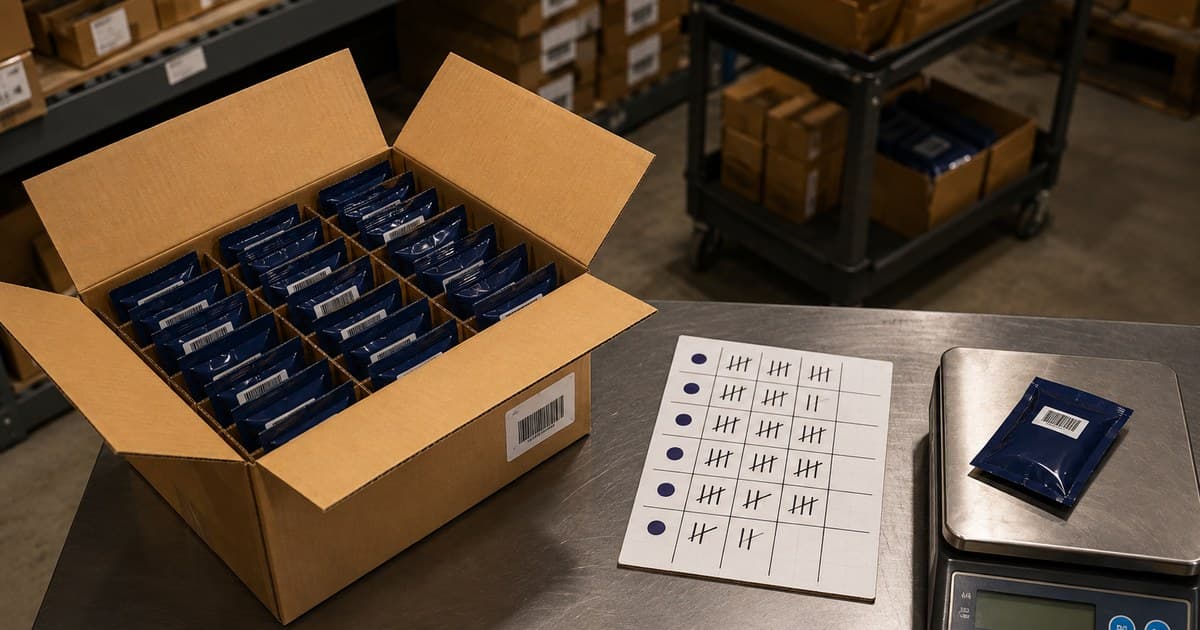
Research question
How quickly can a cannabis dispensary prove that an affected product lot is contained? A shelf marked “hold” is not enough. Units may sit in receiving, a sales floor, a pickup staging area, a transfer, a return, or a customer record. A recall or safety notice also raises questions of authority, communication, and documentation that an administrative team cannot answer by itself. The research question is: what evidence turns a product hold from a label into a bounded, reviewable containment claim?
The evidence chain
FDA recall guidance describes the importance of identifying affected products and communicating corrective action, while the FDA traceability rule illustrates the role of key data elements and critical tracking events. Virginia CCA materials establish the local cannabis regulatory context. The Consumer Product Safety Commission explains recall communication concepts for consumer products. NIST incident-response guidance contributes a useful distinction between detecting an event, containing it, and closing it. These public sources are reference points, not a determination of cannabis recall obligations.
The operational analysis is to build the record in layers. Start with the trigger: notice, lab result, supplier message, internal investigation, or other documented signal. Then capture product, lot, package, and quantity identity. Next locate the population across receiving, available stock, quarantine, transfers, returns, pickup staging, and sales history. Finally record status, owner, action time, unresolved gap, and release authority. Each layer has a different purpose; “we checked inventory” is not a substitute for scope.
Measuring containment without false precision
Measure time to initial hold, time to complete the first location search, time to reconcile system and physical quantities, and time to resolve exceptions. Report completeness beside speed. A search completed in ten minutes but missing transfer records is not stronger evidence than a slower search that reconciles every location. State the denominator: units, packages, cases, lots, or transactions. A lot-level claim should not be presented as a unit-level count unless the relationship is established.
Keep a distinction between known contained, known moved, unknown location, sold or transferred population, and awaiting owner decision. Do not assume that a negative shelf count proves a negative sales history. Do not treat a customer notification list as proof of product identity unless the underlying transaction and lot mapping are reliable. Preserve the source records and the time they were queried because systems can change during response.
Methodology and evidence scope
This review compared public FDA, Virginia CCA, CPSC, NIST, and FDA traceability resources available on August 23, 2026. The proposed study uses a tabletop sample of hypothetical hold notices and tests whether reviewers can reconstruct trigger, identity, locations, quantities, status, and authority from a defined record set. It does not contact customers, inspect a facility, test a tracking platform, or interpret jurisdiction-specific reporting law. Any real event requires the organization’s established response process and qualified decision makers.
| Evidence stage | Claim supported | Open question |
|---|---|---|
| Trigger and identity | Which product is affected | Is the scope complete? |
| Location and quantity search | What is contained | What remains unknown? |
| Status and authority | Who may release or dispose | What rule governs closure? |
Facts, analysis, and role boundaries
The fact is that recall guidance and incident-response practice depend on identification, action, and communication. The analysis is that a containment dashboard should show evidence state rather than a single green flag. Administrative support can timestamp notices, consolidate location responses, compare quantities, and escalate missing links. The accountable compliance, quality, or business owner must determine legal duties, customer communications, product disposition, and release.
The response record should preserve negative evidence too: systems searched, locations excluded, date ranges, unavailable data, duplicate identifiers, and assumptions. A documented unknown is safer than an invented zero. When a product is transferred to another party, record the handoff and owner rather than treating the source location as contained. When a held unit is destroyed or returned, preserve the authorization and quantity reconciliation according to policy.
A response timeline benefits from a distinction between notification time and effective control time. Receiving a message is not the same as preventing a sale, and changing a status is not the same as confirming physical segregation. Record both. If a notice changes while the search is under way, preserve the superseded scope and explain the new one. This prevents later reviewers from mistaking a moving instruction for a single, perfectly known population.
Limitations and conclusion
Public recall guidance cannot establish the specific duties for every cannabis product, state, supplier, or incident. System timestamps can be incomplete, lot mappings can be wrong, and a physical search can miss an item outside the expected location. The proposed metrics therefore indicate evidence quality, not safety or legal closure.
The evidence supports a bounded conclusion: a dispensary can defend a containment claim only when the trigger, affected identity, searched population, quantities, current locations, unresolved gaps, and release authority are connected. Measure completeness with speed, preserve unknowns, and keep the consequential decisions with the responsible owner. That produces a more honest research and operations record than a fast status label unsupported by traceability evidence.
Visible sources
- FDA recall guidance (opens in a new tab)
- FDA Food Traceability Final Rule (opens in a new tab)
- Virginia Cannabis Control Authority (opens in a new tab)
- Consumer Product Safety Commission recalls (opens in a new tab)
- NIST incident response (opens in a new tab)
Frequently Asked Questions
What is the first evidence in a product hold?
Record the notice or trigger, affected product and lot identity, time received, and the person who authorized the initial status.
Does a location search prove containment?
Only for the population and systems actually searched. The scope, exclusions, quantities, and unresolved records must be stated.
Who decides whether a held product is released?
The designated compliance, quality, or business owner decides release under applicable rules; operations support maintains the evidence trail.